
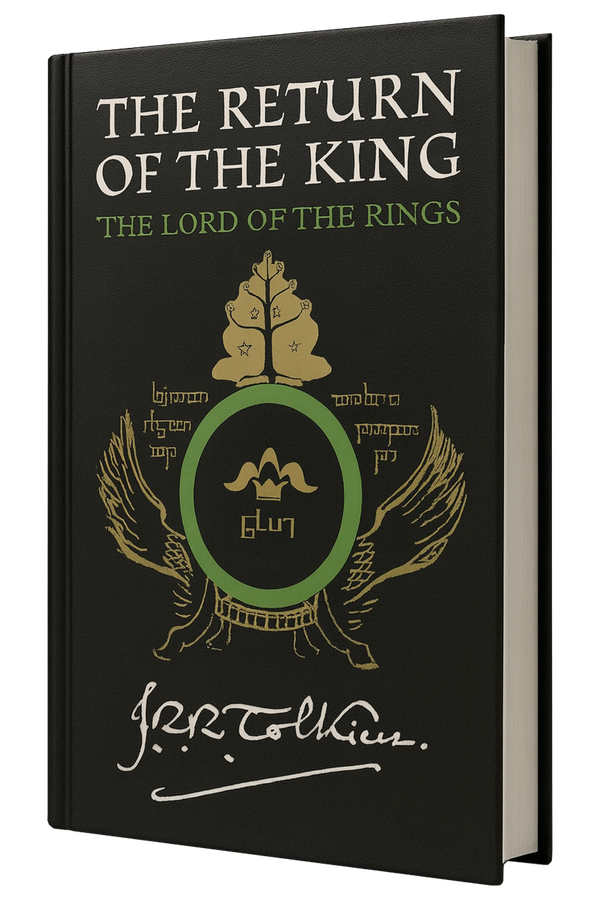
Short Review
This works as the monumental crescendo of the legendarium, delivering a conclusion that is as sorrowful as it is triumphant. The Return of the King is defined by Tolkien’s concept of "eucatastrophe"—the sudden turn from disaster to joy. The Battle of the Pelennor Fields is rendered with cinematic intensity, yet the book never loses sight of the cost of war. The true power of the finale, however, lies in its refusal to offer a simple "happily ever after." The scouring of the Shire and Frodo’s inability to heal from his spiritual wounds add a layer of realism rarely seen in fantasy. The result is a poignant meditation on loss and the passing of an age, cementing the saga as a literary masterpiece of the 20th century.
About the Author
J.R.R. Tolkien (1892–1973) was an English writer, poet, philologist, and university professor at Oxford. He is often described as the "father of modern fantasy literature." His academic background in Old English and mythology strongly shaped his fictional worlds.
Integrative Paths
Comments
Join the conversation. Please log in to post a comment.