
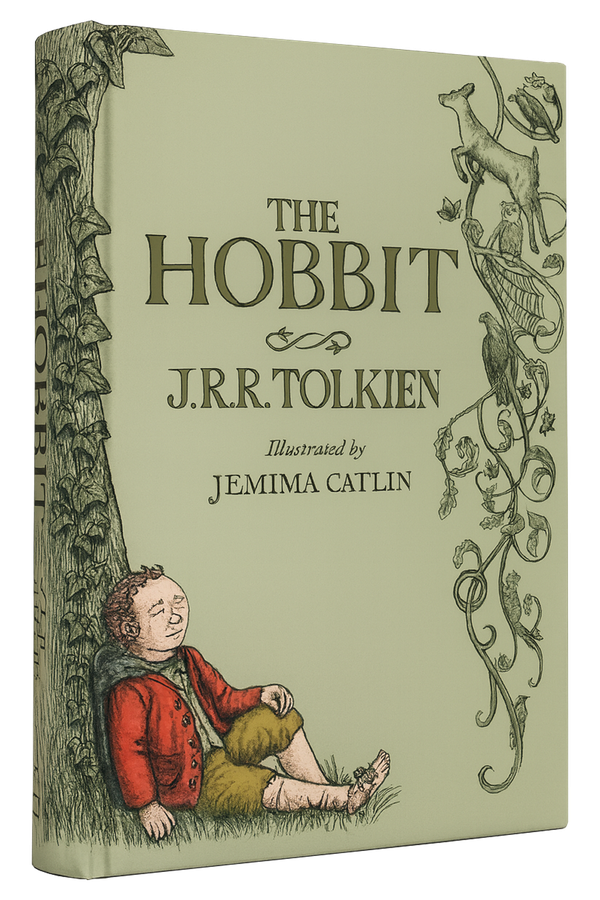
Short Review
While initially conceived as a children’s story, The Hobbit works as a disarmingly gentle entry point into a much darker mythology. Tolkien’s prose here is charming and episodic, functioning as a classic hero’s journey that emphasizes wit over brawn. However, beneath the whimsy of riddle games and barrel rides lies a finely handled study of character growth. Bilbo’s transformation from a timid homebody to a brave "burglar" is drawn with quiet psychological depth, proving that courage is found in unlikely places. It lacks the archaic grandeur of the later trilogy, but its tighter focus and lighter tone make it a perfect, self-contained adventure that plants the seeds for the epic conflict to come. It is an key prologue that establishes the geography and the stakes of Middle-earth.
About the Author
J.R.R. Tolkien (1892–1973) was an English writer, poet, philologist, and university professor at Oxford. He is often described as the "father of modern fantasy literature." His academic background in Old English and mythology strongly shaped his fictional worlds.
Integrative Paths
Comments
Join the conversation. Please log in to post a comment.