
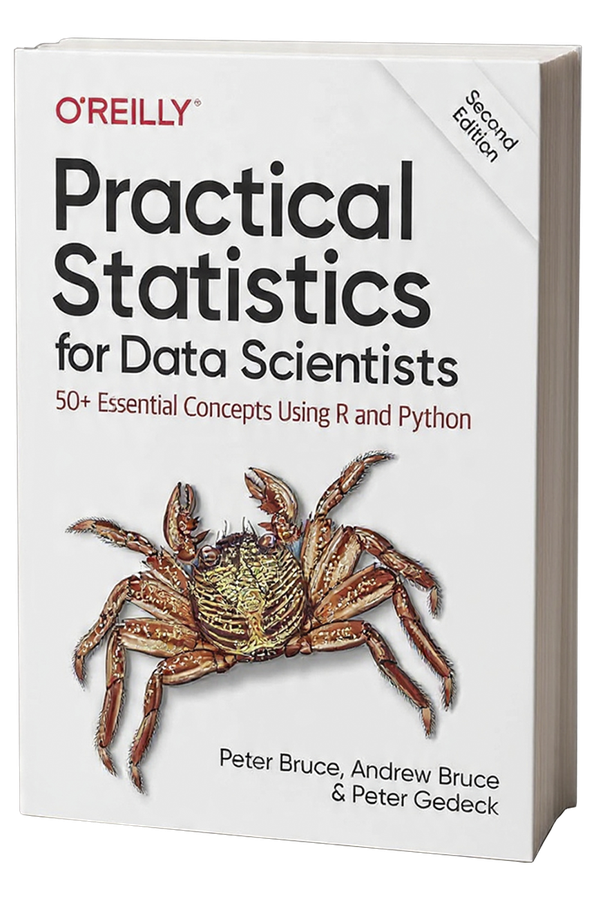
Short Review
Bruce and Bruce deliver a rare combination of clarity and practicality. Rather than overloading readers with formulas, they emphasize interpretation - how statistical ideas apply to real analytical work and model evaluation. Each concept is framed in the context of modern data workflows, including machine learning validation, feature importance, and model diagnostics. The book’s bilingual use of R and Python enhances its flexibility for professionals across different ecosystems, making it a superb bridge for statisticians entering data science or data scientists refining their statistical literacy. The tone is crisp, structured, and example-driven, making it ideal for self-learners or teams seeking a common foundation. While not exhaustive, its value lies in its density - there is almost no filler. Readers walk away with practical fluency in the statistical reasoning that underpins every sound model.
About the Author
Peter Bruce is the founder of the Institute for Statistics Education at Statistics.com and an advocate for practical statistical training in data science. Andrew Bruce, his co-author, is a data scientist and consultant with experience in applied predictive modeling and data analytics across multiple industries.
Integrative Paths

Comments
Join the conversation. Please log in to post a comment.